|
Hone your skills with the Machakos game
By Steve Harrington
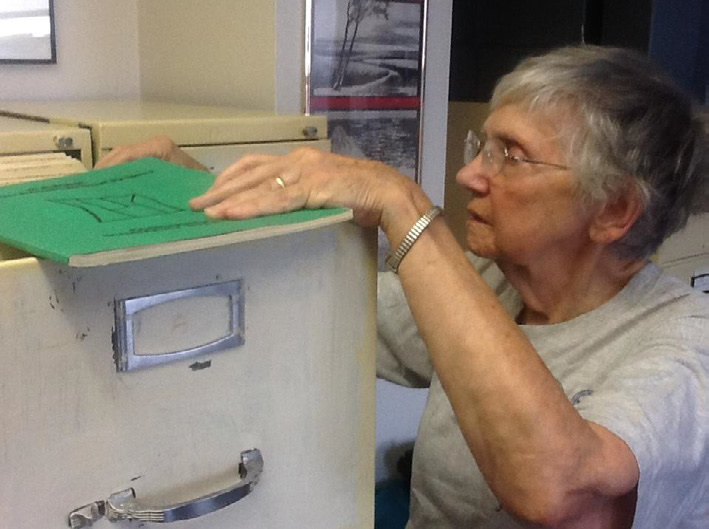
It is easy to search for Human Development Project documents now with Master Archivist, Marge Philbrook, and the new database tools in the Global  Archives Project. Sometimes one can find reports, training programs and photos too. Archives Project. Sometimes one can find reports, training programs and photos too.
But reading about it isn’t quite like being there. Being in a Kenyan village, for example, and working side by side with local people to plan and execute a project like better health-care services is far better than reading.
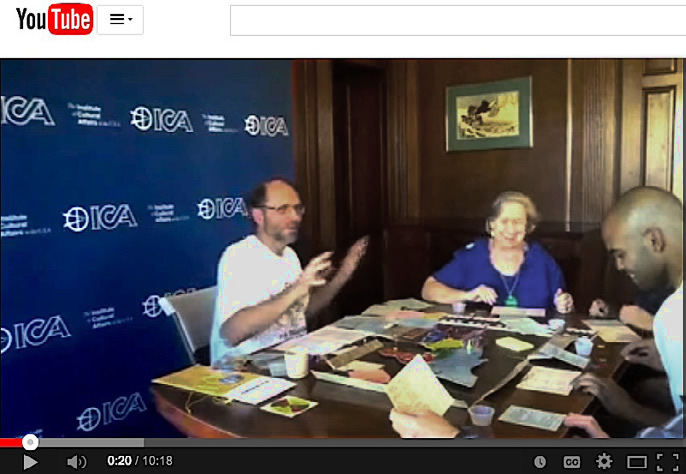
One day we discovered an Imaginal Education gem in the Archives – a game actually – not Dungeons and Dragons or World of Warcraft but the Machakos Village Development Simulation Game. As we looked at the game gear, we realized we needed a “game guide” to recapture how the game is played. Ken Otto got the game organized, and then video-taped the playing of the game.
Very interesting. The game puts you in a “situation” – a group of villages in the Machakos District of Kenya. The host or “game guide” invites a team to “come pull together – to “Harambe, Harambe” – and sing a new song like Kenyans do – to share an opportunity for a small group of game players to operate as a 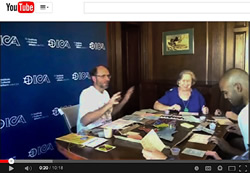 team, to work side by side with local people on economic, political (organizational) and cultural challenges. team, to work side by side with local people on economic, political (organizational) and cultural challenges.
After accomplishing project goals such as having fresh water, health-care access or jobs for kids when they leave school, they celebrate their victories. Team leader Joseph Flowers laughed at the end of the game and said, “Well, it’s a learning experience leading a project team in Machakos. Our challenge was to work with the village of Kamweleni to help them build a water tank that they wanted... sometimes we were successful getting materials and completing our tasks, sometimes not, getting something done takes a lot of patience.”
What would it be like to go on a shared journey of human development like this on the other side of the globe or even in your own backyard? What are the project development skills needed to do human development projects in the 21st Century?
 These days very few real-world problems (challenges), show up organized in “one brain units.” It’s not like completing a private crossword puzzle in one sitting over a cup of coffee. Instead real challenges take a group of people pulling together in a team. But in our time “come-pull-together skills” are a scarce but learnable skill, apparently when there is a little patience and humor. These days very few real-world problems (challenges), show up organized in “one brain units.” It’s not like completing a private crossword puzzle in one sitting over a cup of coffee. Instead real challenges take a group of people pulling together in a team. But in our time “come-pull-together skills” are a scarce but learnable skill, apparently when there is a little patience and humor.
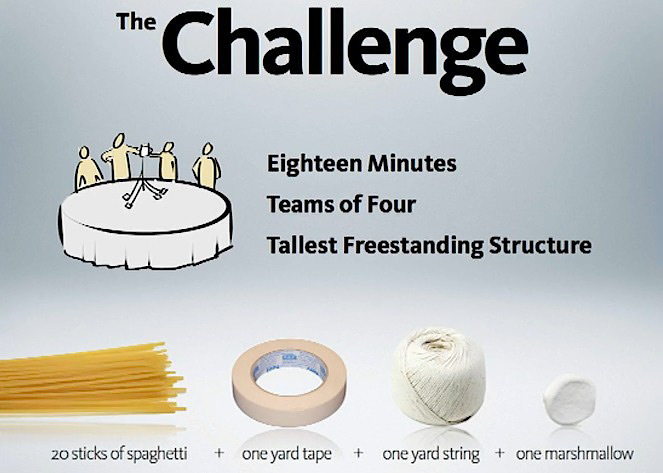
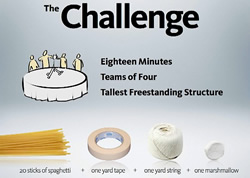
More than two million people have watched a short video clip demonstration of how self- managed project teams learn to take up a table-top challenge. There is a lot of laughter in the 4-5 minute video clip, the Marshmallow Challenge (view at http://www.ted.com/talks/tom_wujec_build_a_tower#t-19396). Various groups have taken the Marshmallow Challenge including kindergarteners, MBA students, experienced business leaders, architects and engineers.
The idea of a table-top “Design Challenge” like the Machakos Game or the Marshmallow Challenge is to understand what it takes to work collaboratively by practicing skills in 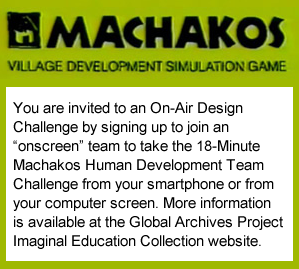 a fun, new environment. In educational circles, the topic of “project based inquiry” for small groups is a very hot topic. It is one of the chapters in OliveAnn Slotta’s book, Image-based Instruction, Foundations and Pedagogy, soon to be published at the Global Archives Project website Imaginal Education. a fun, new environment. In educational circles, the topic of “project based inquiry” for small groups is a very hot topic. It is one of the chapters in OliveAnn Slotta’s book, Image-based Instruction, Foundations and Pedagogy, soon to be published at the Global Archives Project website Imaginal Education.
The Global Archives Project Research Assembly in September plans to offer an 18-minute version of the Machakos Game. It will not be on a table-top but on a computer screen for remotely located teams using collaborative tools. We’d like to hold a competition with small teams drawn from different communities of practice: ToP, IAF, LinkedIn Facilitators, Appreciative Inquiry, Imaginal Educators and the new 21st Century Global Educators network.
Imaginal Education Collection website:
http://wedgeblade.net/wordpress/imaginaleducation/
|