 Peru zooms ahead with self development
Click pictures to enlarge and for
caption
Peru zooms ahead with self development
Click pictures to enlarge and for
caption
By the staff of ICA Peru, with translation by
Amanda Urrutia, ICA Chile volunteer
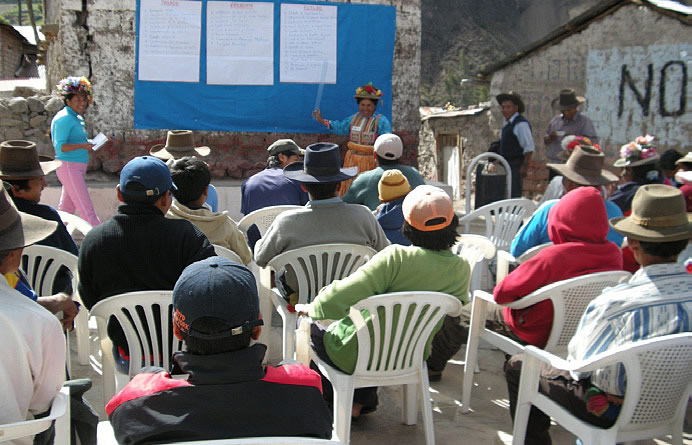
Peru’s Institute of Cultural Affairs (ICA-Peru) has been developing training programs for community leaders using the participative technology of ToP Methods.
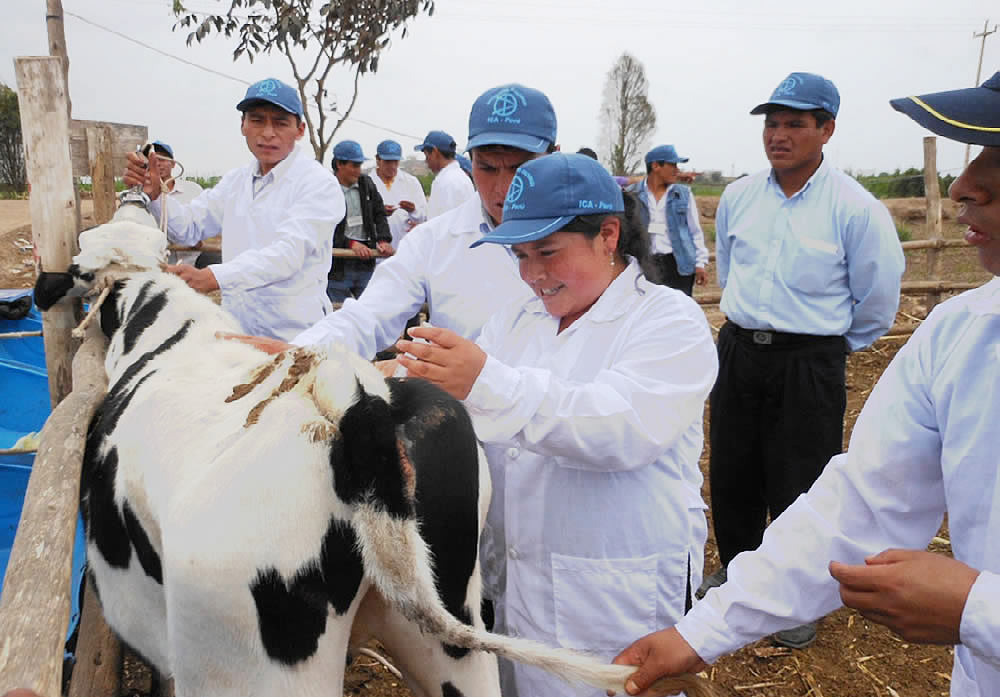
One is a leader-facilitator training program for rural community leaders called Go Ahead Peru. The 21-day program, launched in 2007, focuses on imparting knowledge, developing new skills and changing attitudes. The aim is to build up  the leadership capacity of participants so that they can respond to the needs of their community and collaborate with various actors on the scene. the leadership capacity of participants so that they can respond to the needs of their community and collaborate with various actors on the scene.
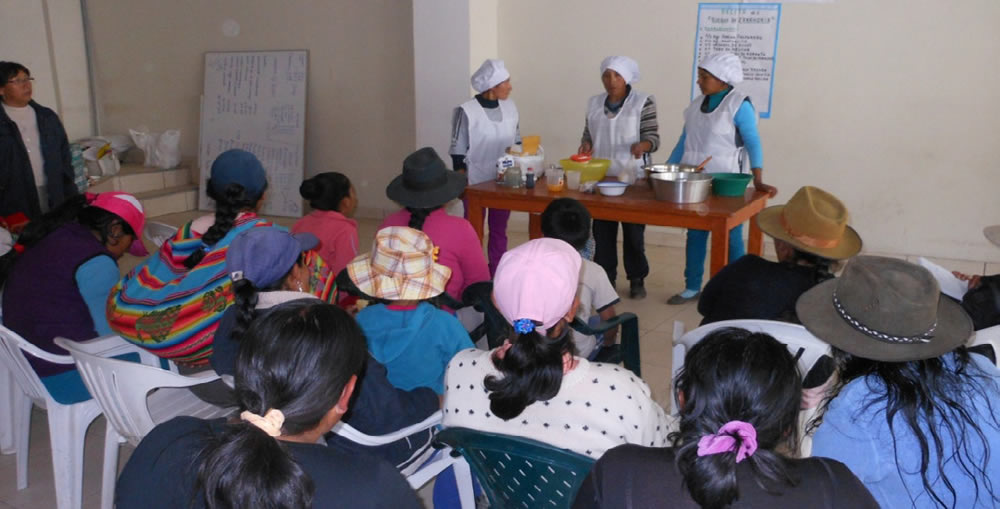
The curriculum is based on needs identified in the community and deals with the cultural, economic and social aspects of development. Workshops are followed up with practical, technical or productive activities. They are the starting point for new business enterprises. There are a total of 65 events that include seminars, study sessions, practical experiences, study visits and celebrations.
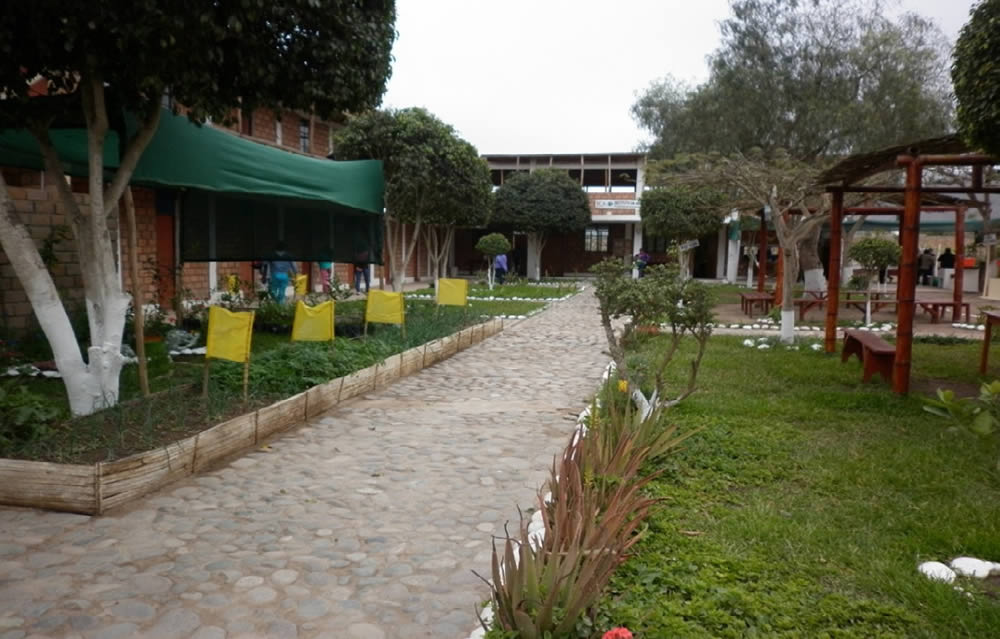
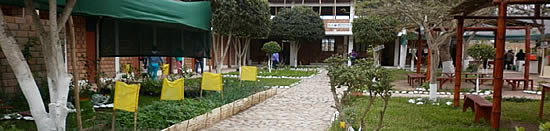
Leaders begin their day at the training centre in Azpitía at 6 am by cleaning their work areas. Small teams and discipline help to foster positive habits. They also help counter the negative attitude men have to “domestic” duties in the male-dominated society.
Impact on the community
At the end of the three weeks, the 30 participants graduate as Leader-Facilitators. They return home with a four-month implementation plan during which they use what they have learnt to set up projects and enterprises in their community. ICA-Peru’s approach is to incorporate in the training program a plan for each town based on its needs with a schedule of specific dates for various events related to its development.
Many graduates, especially women, return with a firm decision to share with their people what they have learned. They also go with plans to start their own business. Many of them would have waited long for the opportunity that the training program provides. They would have had to make arrangements to handle family obligations in order to come, leaving their children with relatives and sometimes even bringing along their babies to the training program.
An important aim of the training program is to inculcate among the graduates a new state of mind and a positive attitude towards their community. When they return highly motivated and carry out activities favourable to their village, it  makes a big impact on their families and neighbours. Many who turned down the chance to go for the training then tend to regret their action. makes a big impact on their families and neighbours. Many who turned down the chance to go for the training then tend to regret their action.
One graduate, Lidia Guerrero, said: “This Program was important to my life, it has opened my eyes; before this I was in the dark. Now I see things differently.” She started a new business – fruity yogurt. With the help of ICA consultants, she perfected it. Each time we visit her community, we see that her self-confidence and income have grown and her business is evolving. There are many other examples like her. The ICA-Peru team coaches such graduates to motivate them to lead their community.
Participants in this training program come from communities located high up in the mountains at an altitude of 2,500 to 5,000 metres above sea level and from native communities living in the jungle.
Enduring results
After years of using our methodology, we have exemplary communities that show that the Go Ahead Peru program produces positive results. Visiting these communities provides a learning experience for our new trainees. It is difficult to visit each graduate but we have contacted 70% of them. It has been gratifying to listen to their account of what it was like to have visited Azpitía and undergone a training that has changed their lives in so many ways.
Some of their accomplishments: taking care of issues in their communities, holding effective meetings, completing long-delayed infrastructure projects, starting new enterprises, organizing community work, initiating artisan workshops, and getting consensus on development plans. All this demonstrates their commitment, responsibility and will to help develop their own communities.
ICA-Peru’s leadership training programs
Over the last 35 years, ICA-Peru has helped people take charge of their own development. Building effective leadership has produced positive results in these communities. The following are the programs developed over these years:
We started with a Human Development Project in Azpitía in 1979 to create a broader vision for the development of the town. Azpitía received the “Lampa de Bronce” Award from the government in 1984. The award recognizes it as the most effective working community in Peru. Today, it is a tourist resort and an example to neighbouring towns.
Working with CORDES, ICA-Peru held Rural Regional Development Symposiums in eight regions (Arequipa, Cajamarca, Cusco, Lima, San Martin, Junin, Piura and Puno) in 1984. The aim was to support the development of communities by helping them document and share the successful methods they had employed.
We began a new project in 1985 called “Industrial Zone of Villa El Salvador Pilot Plan Implementation”. The aim was to organize, develop and transform informal enterprises in a poor zone, south of Lima. Today, the industrial park provides jobs to many. The program was supported by the United Nations Industrial Development Organization (UNIDO).
During 1990, we were involved in several activities in neighbouring countries. These included leadership training and organizational motivation programs, supported by the Mothers Clubs National Confederation, in eight departments (or states) in Bolivia. We also held training and consultant activities using participative strategic planning methods with different entities in Colombia and Ecuador.
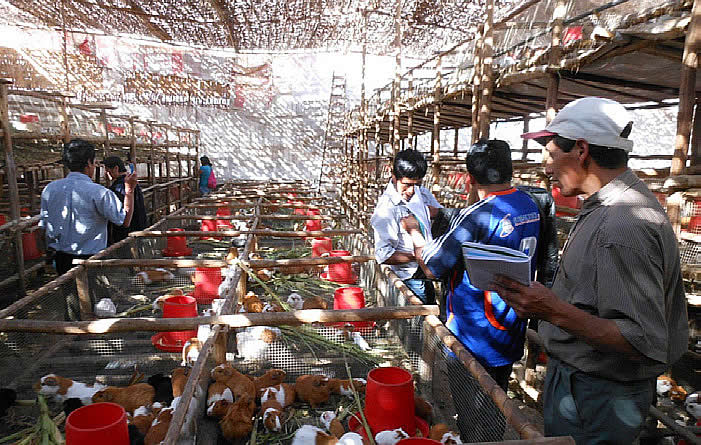
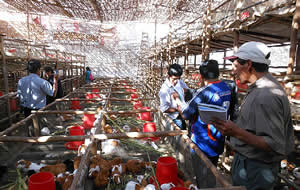 We implemented a training and demonstration program in 50 towns in the valleys of Cañete and Yauyos Provinces, Department of Lima, during 1995. It showed how leader-facilitators could take on the development of their villages and set up family enterprises such as rabbit and guinea-pig farms. This program was then replicated in the Fortaleza River Valley, in the Ancash Department. We implemented a training and demonstration program in 50 towns in the valleys of Cañete and Yauyos Provinces, Department of Lima, during 1995. It showed how leader-facilitators could take on the development of their villages and set up family enterprises such as rabbit and guinea-pig farms. This program was then replicated in the Fortaleza River Valley, in the Ancash Department.
Following such projects, the Lunahuaná-Cañete district has emerged as a strong tourism and economic centre this year and we now have another strong symbol of self-development to share with other towns.
We held a series of strategic participative planning events for village projects in Fortaleza River Valley during 2003 to 2006. These focused on improved technology for breeding small animals, strengthening of self-esteem, and 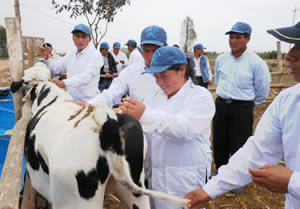 community organization and leadership. We also began an avocado fruit farm project. These producers received an organic certification from EUROGLECH enterprise. community organization and leadership. We also began an avocado fruit farm project. These producers received an organic certification from EUROGLECH enterprise.
Following the earthquake that affected the capital and the Lima and Ica regions in 2007, ICA-Peru developed a house reconstruction program with the help of Japan Platform and Hans Seidel Foundation funding. Up to 3,450 temporary homes and 320 kitchens were built. We also held a training program for development promoters to lead the organization and family enterprises at Chincha Alta districts.
In the last few years we’ve been focusing on leader-facilitator training to promote self-development in communities. We are working in 15 regions, each with an average of 313 communities. We have built a committed leadership and expect the synergy to motivate villagers to start enterprises to better themselves and thus the welfare of the population. These programs are supported by mining, oil and hydroelectric companies as well as by other organizations that work in or with the communities.
|