|
Turning point in Togo with community schools
By Jonathan Dudding, ICA:UK
In 2011 ICA:UK and ICA Togo received a grant from the UK Government to support the development of community schools in Zio District, in the nation of Togo, West Africa. This article describes the intervention and its achievements, but raises the question of how to continue the programme in the light of recent changes in the Government of Togo’s policy.
The Origins of the Project
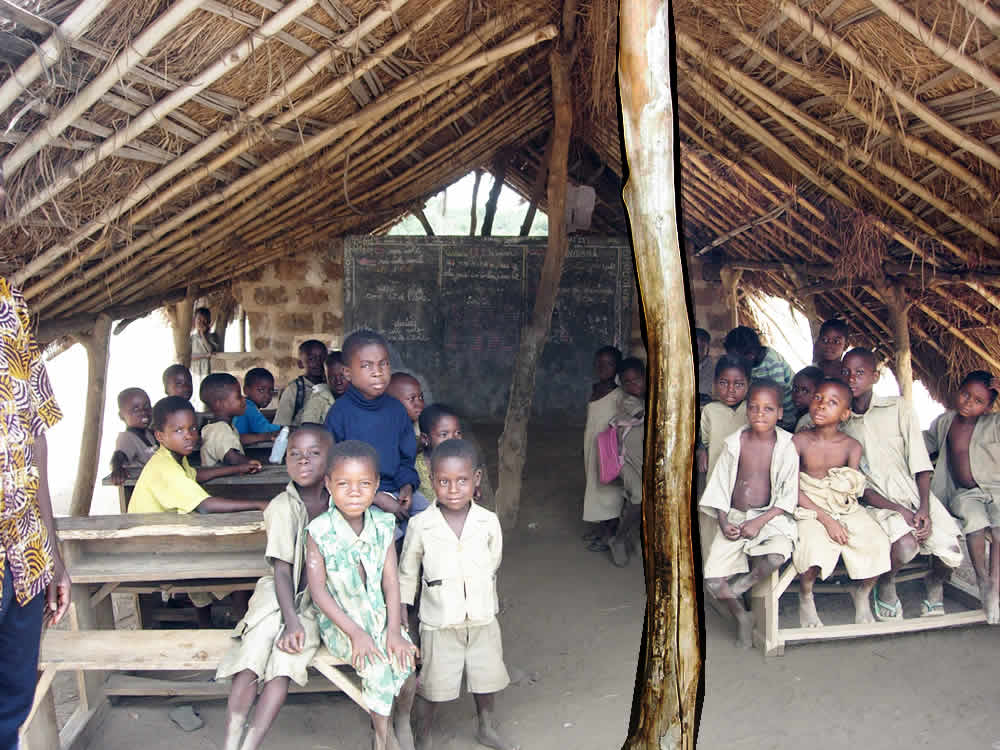
At the end of 2008, the Ministry of Education in Togo estimated that, in order for them to meet their pledge to make primary education universal by the year 2015 (as part of the Millennium Development Goals), the Government needed to recruit more than 3,000 new teachers, build more than 5,000 new classrooms, provide almost 100,000 school benches, and purchase hundreds of thousands of new textbooks. Although it has made some progress in addressing these shortfalls, the absence of government leadership and resources led community members to organise themselves to ensure their children get at least some primary education. While such initiatives are to be applauded, however, seldom do communities have sufficient resources to ensure that the schools can support themselves, nor are the volunteer teachers always able to provide the sort of quality of education that parents expect.

It was to assist communities in these areas that this project was designed and developed. ICA Togo, working closely with the Regional Office of Education in Primary Schools based in Tsévié (the capital of Zio District) designed a project to improve education in 8 rural community schools. The project involved provision of teaching and learning materials and the training of volunteer teachers. Acquiring more skills would enable them to make school more interesting and attractive for pupils. Governance and management would be enhanced through the training of Parents’ Associations, and the status of women and girls strengthened through awareness-raising on gender issues. In addition, income generating projects yielding both short-term and long-term income would be established for the benefit of the schools and teachers. The improved schools would, in turn, contribute towards improved literacy in the communities and facilitate future development initiatives.
Progress so far
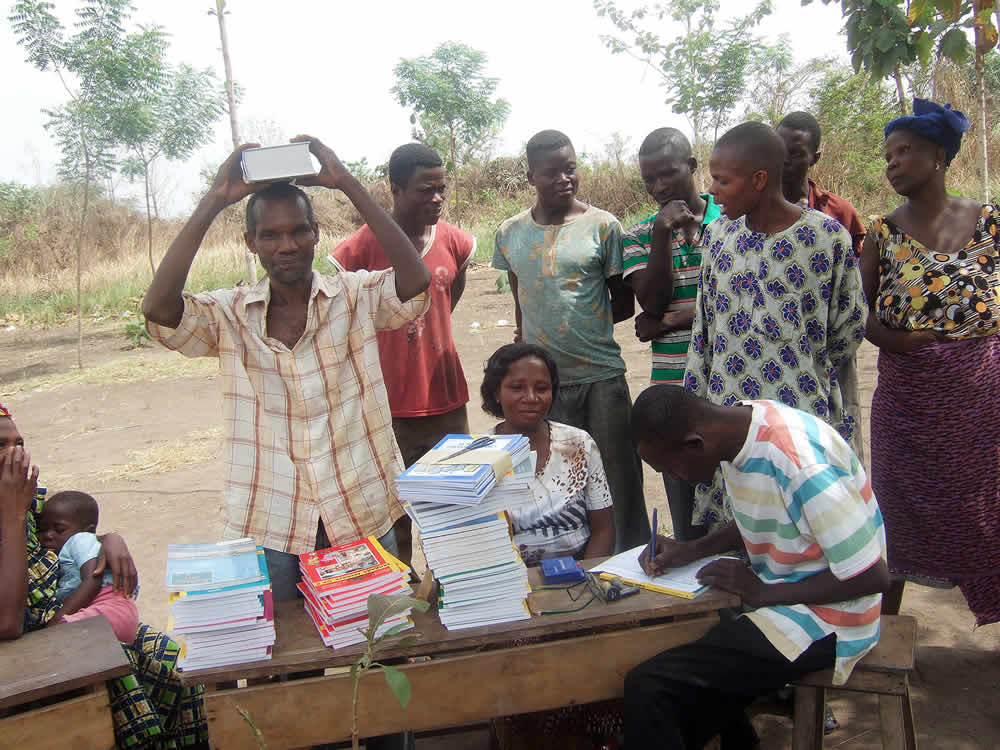
Since the project started in August 2011, the main activities have been the distribution of books and other learning materials to the eight schools involved; training of teachers, parents and community members on gender issues; training of the parent-teacher association on resource mobilisation; training and establishment of tree nurseries as income generation projects for the schools; and training of volunteer teachers in animal husbandry. With the project ending in July 2013, we are pleased that most of the planned activities have been successfully completed and we are already beginning to see the following results emerging:
- Deeper collaboration and recognition of ICA Togo and the programme by the Togolese Ministry of Education. While regional officials have been involved in the project from its early stages, there was no recognition at the national level. This has not had a negative impact on the project to date, but it now enables regional and local officials to participate and contribute more fully to the project knowing their superiors have approved it. During a recent visit to Togo, I saw the Chief Secretary (the most senior civil servant) in the Ministry of Education who was keen to hear about the progress of the project and to share the Government’s thinking on the way forward.
- Recognition by the teachers and communities that the project is valuable, partly evidenced by direct feedback after training and provision of books/materials, and partly by an increase in the numbers of children attending the 8 schools (from 800 to 969).
 According to headmasters, the teaching of volunteer teachers has improved as a result of the training they received According to headmasters, the teaching of volunteer teachers has improved as a result of the training they received - Communities have continued to demonstrate their commitment to the schools; the programme has contributed to an increased sense of ownership and stronger relationships between the community and the schools
- Both short and long term income generating projects have been established and, while none have started yielding income yet, they are on track to do so.
Inevitably there have been challenges in the project, including theft of some goats from the volunteer teachers’ homes, drought affecting the teak seeds/seedlings and, at a different level, the deeply entrenched attitudes and behaviours concerning the roles of men and women in the villages, and the bias against both girls attending schools and women as teachers. Some progress has been made, with the number of girls enrolled increasing and some female volunteers able to teach, but it is clear that there is still some way to go towards greater gender equity.
Where next?
When this project was conceived, the thinking was that these eight villages included in the programme would be a starting point, and that the approach, if it proved effective, could be replicated in other parts of Togo and in other countries. While the latter remains a possibility (in Uganda, for example, there is a similar situation where communities are  starting to establish their own schools), the situation in Togo is now changing. The Government has decided to take over all existing community schools on January next year, thereby taking responsibility for all aspects of the schools. While in principle this move is welcome (and we have been at pains to include the Ministry of Education in the project so that the school curriculum ties in with the mainstream curriculum, the teaching staff are subject to the same standards as applied elsewhere, and the schools’ sustainability is more assured) there are big questions as to whether the Government has the resources to implement such a policy and whether, as a result, these schools will be able to continue. Already we can see signs that communities’ behaviour is changing. In one village they were asking why they should work hard to construct better classrooms for the school when the Government would be able to build new classrooms next year. Equally, volunteer teachers are increasingly worried that when the Government does take over, there might be no posts for those without the official qualifications. starting to establish their own schools), the situation in Togo is now changing. The Government has decided to take over all existing community schools on January next year, thereby taking responsibility for all aspects of the schools. While in principle this move is welcome (and we have been at pains to include the Ministry of Education in the project so that the school curriculum ties in with the mainstream curriculum, the teaching staff are subject to the same standards as applied elsewhere, and the schools’ sustainability is more assured) there are big questions as to whether the Government has the resources to implement such a policy and whether, as a result, these schools will be able to continue. Already we can see signs that communities’ behaviour is changing. In one village they were asking why they should work hard to construct better classrooms for the school when the Government would be able to build new classrooms next year. Equally, volunteer teachers are increasingly worried that when the Government does take over, there might be no posts for those without the official qualifications.
The project now needs to consider how best to continue. Many donors are reluctant to support projects which fill the gaps in Government-run services. The idea of supporting a community school, in this context, is exciting because it supports an initiative of a community to improve the life chances of their children. Once that school is taken under the Government’s wing, however, then probably the main funders will be those multi- and bi-lateral donors already working through the Ministry of Education.
While supporting schools is important, and the likelihood is that they will continue to need support even if the Government does take over, there are plenty of other needs in the communities which should be addressed when we think of this in terms of community development. In my recent visit, we discussed needs with the community members, and many talked of issues related to income generation, water and sanitation, and environmental issues.
It is the latter that will probably inform the way forward for this project. By strengthening the community schools and using them as an entry point into the wider community, ICA Togo has established its credibility and built relationships with the local leadership. It is now well placed to build on that platform of mutual trust and respect to support the communities to develop in other areas and to continue to include the schools in the activities as an integral part of the community.
Jonathan Dudding is Interim Director, ICA:UK
|