As we daily encounter the realities of changing climate and escalating food and energy prices, it’s becoming clear that one of the dominant realities of our century will be “localization” as  Rob Hopkins called it in “The Transition Handbook” first published in the UK in 2008. The understanding of “Peak Oil” imposing limitations on future energy usage makes it clear that our civilization – and even the survival of our species – must move forward as autonomous sustainable localized communities – or not at all. This transition process will bring about the disintegration of the global economy as we know it, as transportation costs become a dominant factor in product costs and consumerism declines sharply as values change. Rob Hopkins called it in “The Transition Handbook” first published in the UK in 2008. The understanding of “Peak Oil” imposing limitations on future energy usage makes it clear that our civilization – and even the survival of our species – must move forward as autonomous sustainable localized communities – or not at all. This transition process will bring about the disintegration of the global economy as we know it, as transportation costs become a dominant factor in product costs and consumerism declines sharply as values change.
This reality offers a great challenge to the ICA to collaborate in the creative process of this great transition of localization to assure that it is based on the cultural values of abundance, consensus and collaboration rather than those of scarcity, dominance and conflict. This is a theme that ICA-Peru has been developing over the past few years.
In Peru, or any other developing country, you can pass through endless small remote communities and encounter front-room stores in homes selling an array of global brands of soft drinks, beer, potato chips, pasta, cookies, etc. to the very people who produce the raw materials of these largely unnecessary products. These shopkeepers are unconscious agents of the global economy who are draining cash from their subsistence economies. This money represents the thin line of their precious capital needed to build viable sustainable communities for the 21st Century.
Not only do these global brands draw off scarce cash, but they also have created a lifestyle of dependency on new unhealthy “foods” which have led to a secondary effect of the development of  typical urban “diseases”, leading to rapidly increasing sickness expenses – of course, treated with global brands of medications. While “peak oil” will weaken these trends in the coming decades, the opportunity is to link these communities to the simple changes they can make NOW to take back control of their lives, their values and the natural health of their cultures. typical urban “diseases”, leading to rapidly increasing sickness expenses – of course, treated with global brands of medications. While “peak oil” will weaken these trends in the coming decades, the opportunity is to link these communities to the simple changes they can make NOW to take back control of their lives, their values and the natural health of their cultures.
|
|
Four themes of action have emerged in our work with many communities stretched over half of the geography of Peru:
- Transform local resources for value added which is currently passing to middle men and urban factories: make thread and sweaters from your wool and preserve your fruits to sell to local and regional markets.
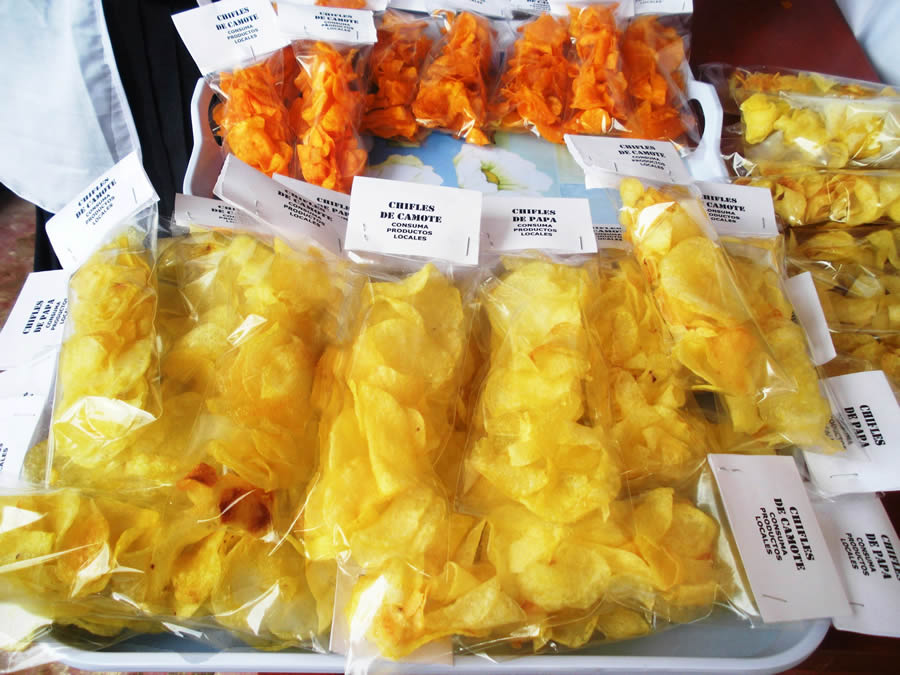
 Replace imports from national and international factories which come into your local economy: make clothing for local markets and replace packaged snacks and bottled drinks with local products of superior quality and lower prices. Replace imports from national and international factories which come into your local economy: make clothing for local markets and replace packaged snacks and bottled drinks with local products of superior quality and lower prices.- Create new products and services to meet the unique needs of your local zone: respond to the real needs of people through the development of products designed in direct contact with the people who want them.
- Buy Local Products from local suppliers and keep your money circulating in the local economy: hundreds of communities in the UK and around the world even have their own currencies to motivate local purchasing.
The communities where these approaches have been most readily adopted are those  where the relationship to the future has been grounded in cultural quality-of-life values like simplicity, community, involvement of women, inclusion of youth, event-based marketing through celebrative fairs, etc. This work is always consensual by its very nature and done in enlivening forms of engagement with all sectors of the community. Communities engaged in this transition are joyful places to visit and live, for they are places where everyone can win with their lives. where the relationship to the future has been grounded in cultural quality-of-life values like simplicity, community, involvement of women, inclusion of youth, event-based marketing through celebrative fairs, etc. This work is always consensual by its very nature and done in enlivening forms of engagement with all sectors of the community. Communities engaged in this transition are joyful places to visit and live, for they are places where everyone can win with their lives.
In the localization scenario of the future, urban society is going to be difficult to sustain. The hope of our future civilization rests with rural communities which have the resources at hand and the resiliency to sustain themselves in the face of the many challenges that lie ahead in this century and beyond. Shouldn’t “Enabling Effective Localization” be a unifying global theme for the work of the ICA?
Ken Hamje,
Ken Hamje is
Executive Director, ICA-Peru |